





Summary
Learn how to view and manage all user assignments, including Learning Paths and individually assigned courses, from the enhanced Assignments section in the KnowledgeCity LMS now with dedicated tabs for individual and group-level assignments.
Introduction
The Assignments section provides administrators with a complete overview of all user assignments across two dedicated tabs: All Users (for individual assignments) and the All Groups (for group-level assignments). From here, you can filter, sort, and manage assignments, set schedules, send reminders, and generate detailed reports. This enhanced view gives you unprecedented visibility into every assignment across your entire account.
Steps to Follow
Accessing the Assignments Section
Log in to your KnowledgeCity LMS administrator account.
Navigate to the Assignments section from the LMS left-side panel.
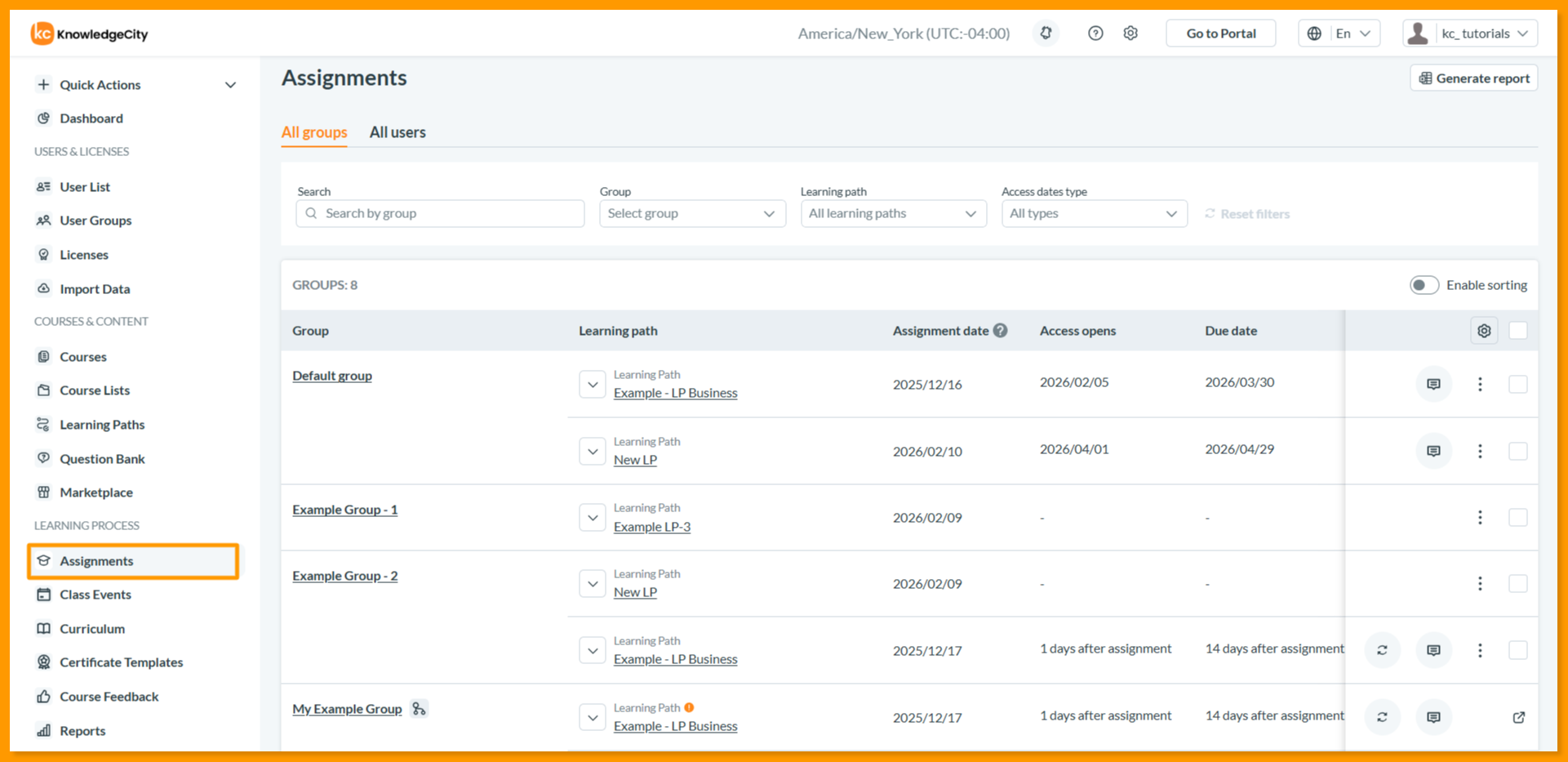
The page will open with the All groups tab selected by default.
The Assignments section features two tabs at the top of the page:
All Users: View and manage assignments for individual users.
All Groups: View all assignments across every group in one centralized place, including all related attributes such as access settings, notifications, recurring rules, and other assignment parameters.
This provides administrators with complete visibility of all assignments, their settings, and their parameters across the entire organization.
Managing the All Groups Tab
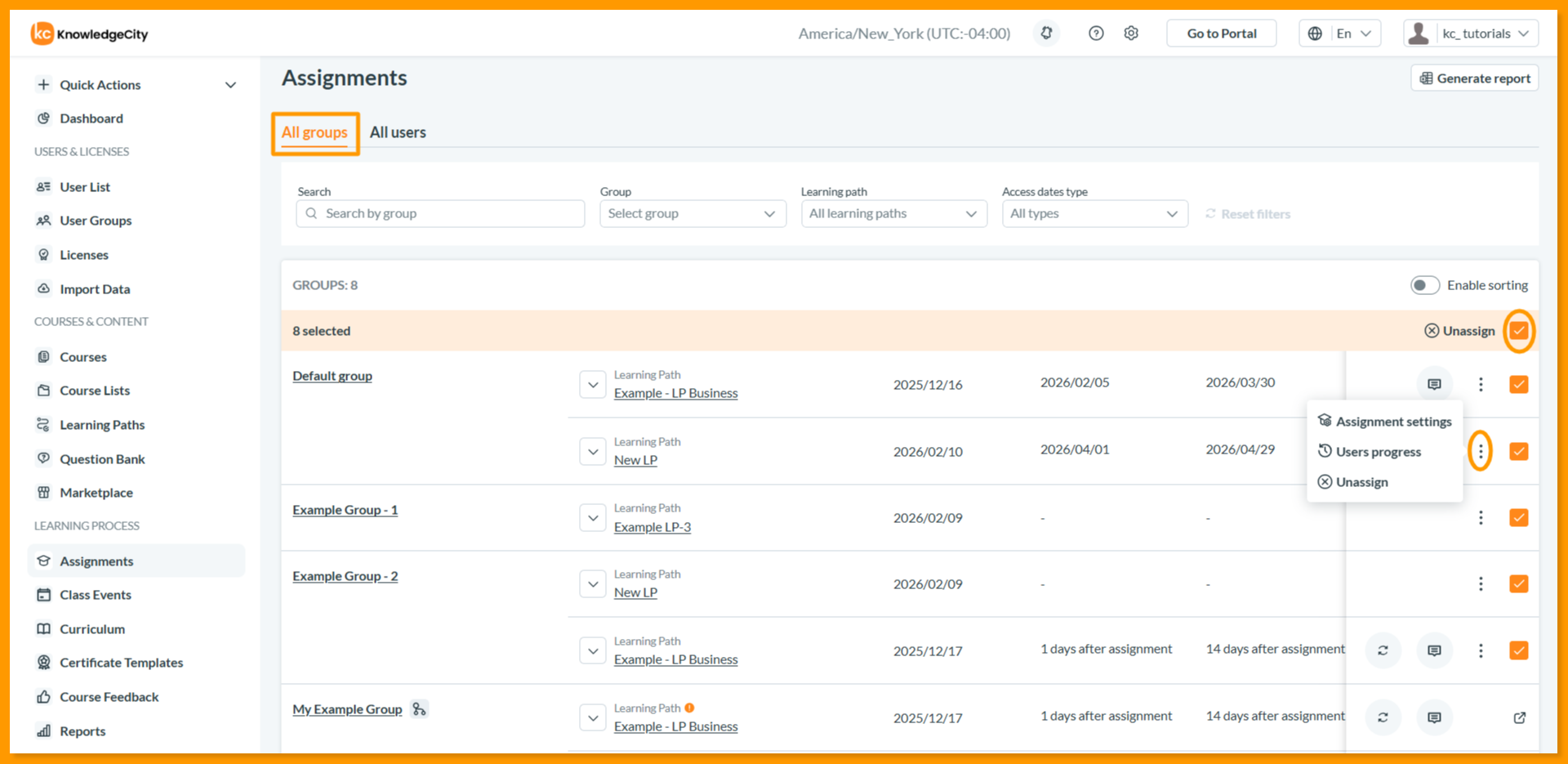
Click the All Groups tab to see all assignments across every group in your account in one centralized place. The system displays not only the assignments themselves but also all related attributes, including access settings, notifications, recurring rules, and other assignment parameters.
Use the filter options at the top to narrow down assignments by group name, specific groups, or learning paths. You can also filter by access dates type to focus on assignments with specific timelines.
The table provides a comprehensive view of all group-level assignments, showing:
Which groups have assigned content.
What learning paths are assigned to each group.
Key dates including when assignments were created, when access opens, due dates, and when access closes.
An Actions menu (⋮) for each assignment to configure settings, view user progress, or unassign.
Toggle Enable Sorting to organize the table by any of these criteria for easier analysis.
Select multiple assignments using checkboxes and use the Bulk menu to Unassign multiple group assignments at once ideal for making bulk changes efficiently.
Where a group assignment uses dynamic dates, the date columns show the relative value, for example 30 days after assignment.
Managing the All Users Tab
Click the All Users tab to view and manage all individual user assignments.
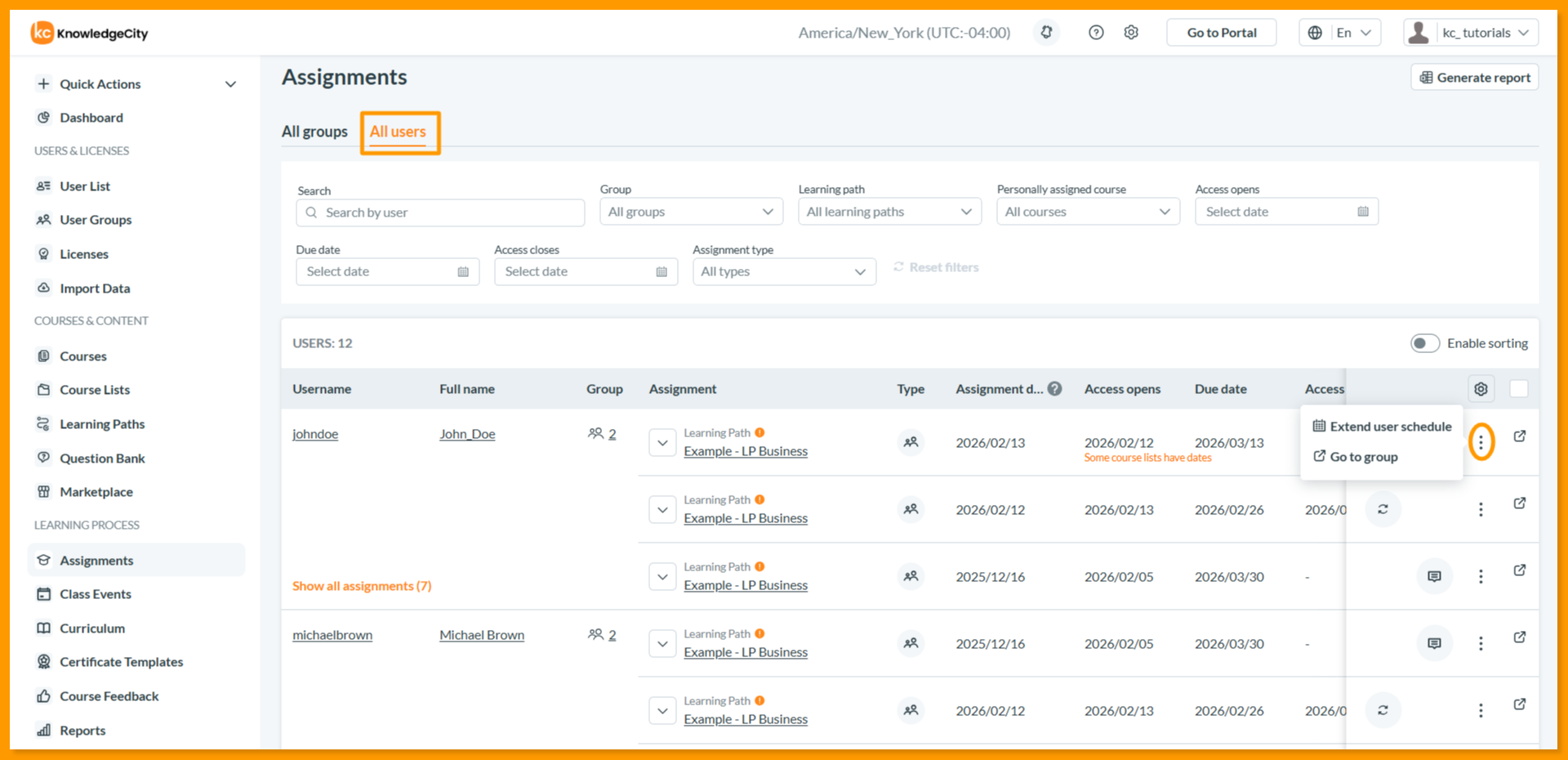
Refine the list using filters at the top. You can search by username or full name, filter by specific groups, narrow down by learning paths or by course, and set date ranges for access opens, due dates, or access closes. The assignment type filter lets you toggle between Personal, Group, or All users. Each date filter takes a From and a To date, so you can list every assignment that falls between two dates.
The table displays a complete details of each user's assignments, showing:
User information (username and full name) alongside their group details.
What assignments (learning paths or courses) each user has.
Whether the assignment is personal or group-based.
Important timeline information including assignment date, access opens, due date, and access closes.
Current progress status for each assignment.
Toggle Enable Sorting to reorganize the table by any column. Group-level assignments are clearly marked and linked directly to Group Management for easy reference.
Select multiple non-group assignments using checkboxes to perform bulk unassign actions if needed.
Course lists and courses nested under a learning path each show their own Assignment date.
Dates are shown as calculated calendar dates for each user, even where the schedule was set with dynamic dates.
Generate report creates a report of the current list, including the Assignment date and the Completion date for each assignment.
Managing Assignments:
Each assignment includes an Actions menu (⋮) with options tailored to the assignment type:
For Learning Paths: Configure assignment settings (deadlines, recurring rules, access) or unassign. For more detail, see our article How to View and Manage Assignment Settings
For Courses: Set learning schedules, reset progress, manage course cycles, or unassign.
For Group Assignments: Extend individual user schedules or navigate directly to the group assignment page.
Using Extend User Schedule: This feature allows you to extend a user’s access period by updating the End date while keeping the original assignment schedule intact.
Important Notes
Assignments can also be viewed and managed from the Assignments tab under each user's profile, user group, or learning path.
Group assignments are inherited by all group members and cannot be edited directly in the All Users tab of the Assignments section.
The Auto Reminder button shows upcoming due and end dates in a quick-view popup for admins.
The Assignment Settings Preview provides admins with a quick overview of the configured assignment settings.
The Warning icon (hover for details) alerts admins to potential issues such as duplicated or repeated assignments of the same Learning Path.
The Assignment date for a learning path assigned to all users shows the date of the initial assignment.
Removed items are held on the Recycle Bin page in the LMS left side panel, listed by Type, Name, Assigned to, Removed at, and Days left, where Assigned to shows the recipients, or All users when the item went to everyone.
Use Restore to put back a Course, Learning path, Notification, or Certificate template while it is still listed.
A restored notification comes back paused, so activate it again when you are ready to send.
Conclusion
By following the steps above, administrators can efficiently oversee and manage all assignments through both the All Users and All Groups tabs, ensuring structured and timely learning experiences for every user across your entire organization. The new All Groups view provides significantly better visibility and makes it much easier to understand what content is assigned and to which groups across the entire account.