





Summary
KC Library's compliance courses are mapped to the regulations organizations are actually held to, including OSHA, HIPAA, and GDPR. This article explains what that mapping means, which regulations are covered, and what it does and does not do for your compliance obligations.
Introduction
Compliance training is different from other learning. It is not undertaken because someone wants the skill; it is undertaken because a regulator, an auditor, or an insurer expects it, and the organization needs to be able to show it happened.
That makes the link between a course and a regulation the important part. KC Library's compliance content is mapped to specific regulations, so you can trace a course back to the obligation it addresses instead of guessing whether a general course happens to cover it.
Key Concepts
- Regulatory mapping: The association between a course and the regulation whose requirements it addresses.
- OSHA: US workplace-safety regulation, covered across the Safety category — including workplace safety and industrial safety.
- HIPAA: US regulation governing the privacy and security of health information.
- GDPR: EU regulation governing personal-data protection and privacy.
- Compliance category: The top-level category holding compliance content, including Global Compliance and Legal & Ethics.
- Completion record: The evidence that a learner finished a course. It is generated by the platform delivering the content, not by the library itself.
What the Mapping Covers
OSHA — workplace and industrial safety
Safety content addresses OSHA requirements, spanning workplace safety and industrial safety. This is the largest body of regulation-driven content in the catalog, reflecting how much OSHA training a workforce is typically required to hold.
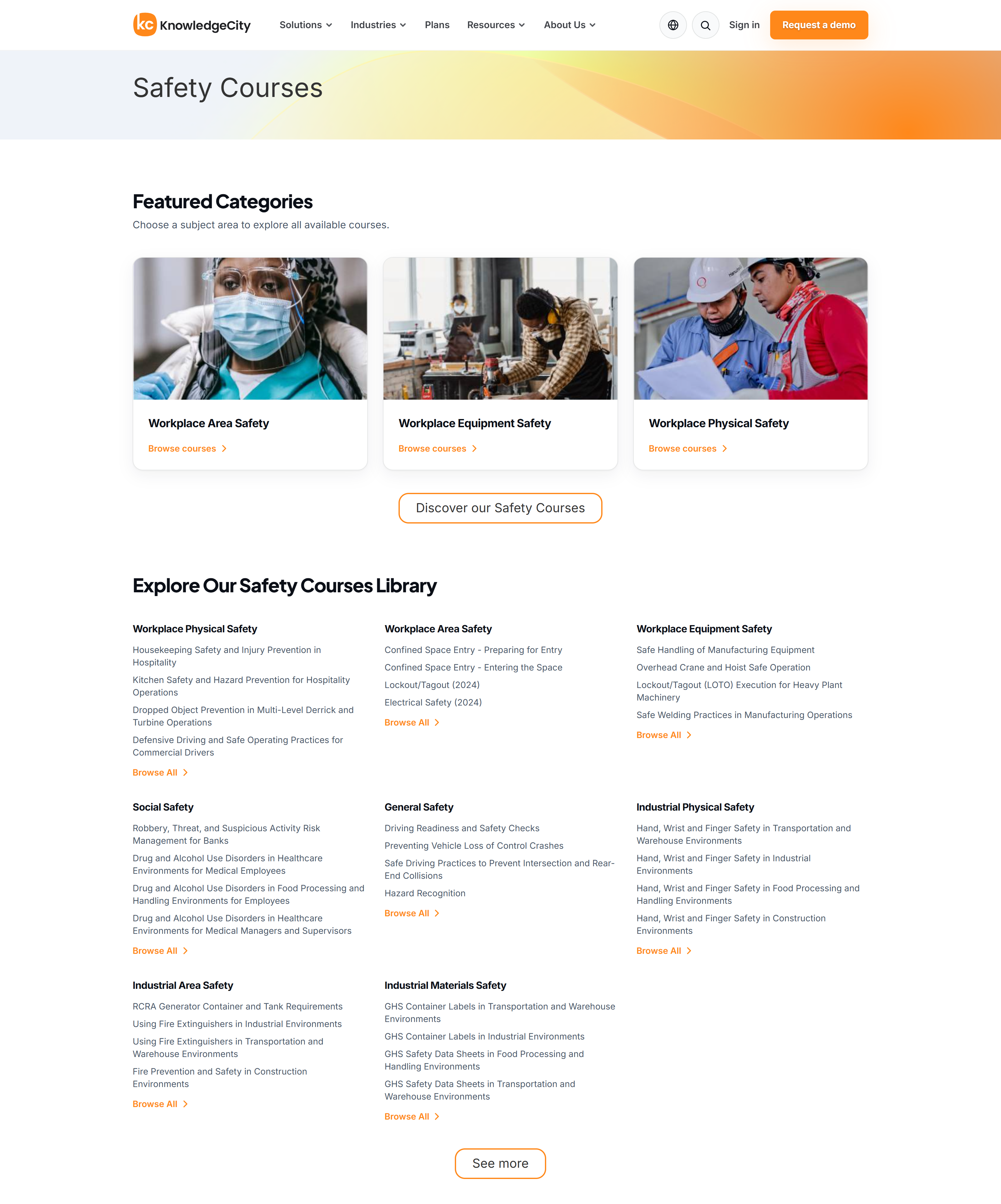
Caption: The Safety category, which carries the OSHA-driven content: workplace area, equipment, and physical safety, plus industrial safety.
HIPAA — health information
HIPAA content addresses the handling of protected health information: privacy obligations, security requirements, and the practices staff need to follow.
GDPR — personal data protection
GDPR content addresses personal-data protection as it applies to staff who handle EU residents' data — a requirement that reaches well beyond organizations based in the EU.
Global compliance and ethics
Beyond those three named regulations, the Compliance category covers Global Compliance and Legal & Ethics, for obligations that are organizational or jurisdictional rather than tied to a single named regulation.
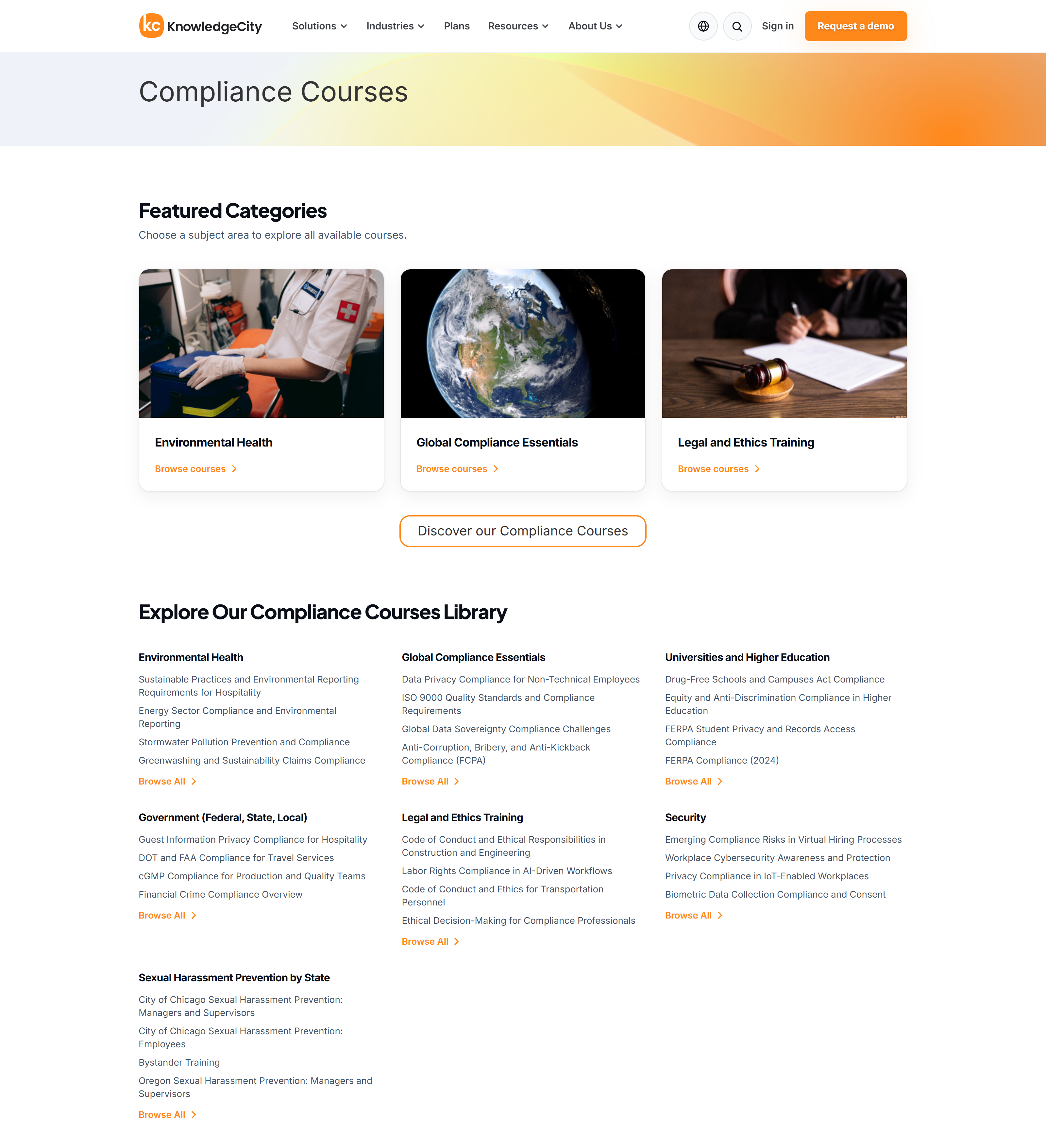
Caption: The Compliance category, covering Global Compliance Essentials and Legal and Ethics Training alongside the named regulations.
What the Mapping Does and Does Not Do
What it does. It tells you which courses address which regulation, so you can assemble a training program against your obligations rather than against topic titles. Because new courses are added weekly, the mapping tracks regulation as it changes rather than freezing at your subscription date.
What it does not do. Mapping is not certification of compliance. Whether your organization is compliant depends on who you train, how often, what records you keep, and how you evidence it to an auditor — none of which the content itself determines. Nor does it substitute for legal advice on which obligations apply to you.
The completion records that evidence training are produced by the platform delivering the courses — the KC LMS, or your own system when content is delivered via SCORM, xAPI, or API.
Conclusion
KC Library's compliance content is mapped to OSHA, HIPAA, and GDPR, alongside broader global compliance and ethics material, so you can select training against real obligations. The mapping identifies the right content; determining which obligations apply to your organization, and evidencing that training happened, remains yours.